Track record
Decide what has to be true. Prove it. Design so that being wrong is survivable. What follows is where that has been applied, and what it produced.
The company
Carbon Six is the company through which most of the engineering and fleet work below was delivered — by Thomas Li as Managing Director, alone where that is enough and at the head of an assembled team where it is not. The most senior person on the engagement is also the one doing the engineering. Paused by choice in 2022 to give Chassis Autonomy undivided attention; resumed in September 2025, a month after the Kongsberg Automotive acquisition completed.
Braking and by-wire systems for four manufacturers, across conventional, electric and automated vehicles. All contracted through Carbon Six.
Lead engineer for the braking system on the new Nissan Note. Separately ran the cost reduction programme for the entire chassis department, returning over €24M a year.
Owned pedal feel, brake performance and refinement on the Jaguar F-Type through to sign-off, and chaired the attribute meetings with suppliers and JLR senior management.
Lead design and development engineer for the carbon-ceramic system on the Continental GT platform, against some of the strictest refinement targets in the industry.
The entire braking system across all electric vehicle programmes, leading engineers in Sweden and China through the build of a new plant. Also led the squad that delivered the first steer-by-wire prototype — the technology later spun out as Chassis Autonomy.
Safety-critical vehicle engineering and risk-based methodologies, applied in the public sector to emergency service fleet operations.
Risk-based methods applied across procurement, vehicle evaluation and maintenance, delivered at the head of a team — replacing precedent-led decisions with evidence-led ones, and coaching the teams so they carried on making them after we had gone. The South Yorkshire work was contracted in support of the National Association of Police Fleet Managers.
Not published outside the Metropolitan Police and a small number of brake friction suppliers, and so not described here. Inside UK policing it needs no introduction: the most severe brake energy test applied to a road vehicle anywhere in the industry, and the reason no Metropolitan Police vehicle — nor any national fleet that has since adopted it — has suffered a brake failure. Thomas did not write the test. He verified the process and the test method, introduced the automated data collection and analysis behind its current form, and supported the Met’s drive to have it adopted across the UK’s 43 forces as best practice.
Blue-light fleets now face a harder problem than either electrification or automation alone: vehicles arriving with substantial ADAS content, bought through frameworks, converted by supply chains, maintained by workshops and driven under training regimes that were none of them designed for it.
Carbon Six were invaluable in getting us to where we are today. They managed where we failed, to get the team on board and retain their positivity.
Head of the UK’s largest emergency service fleet operation
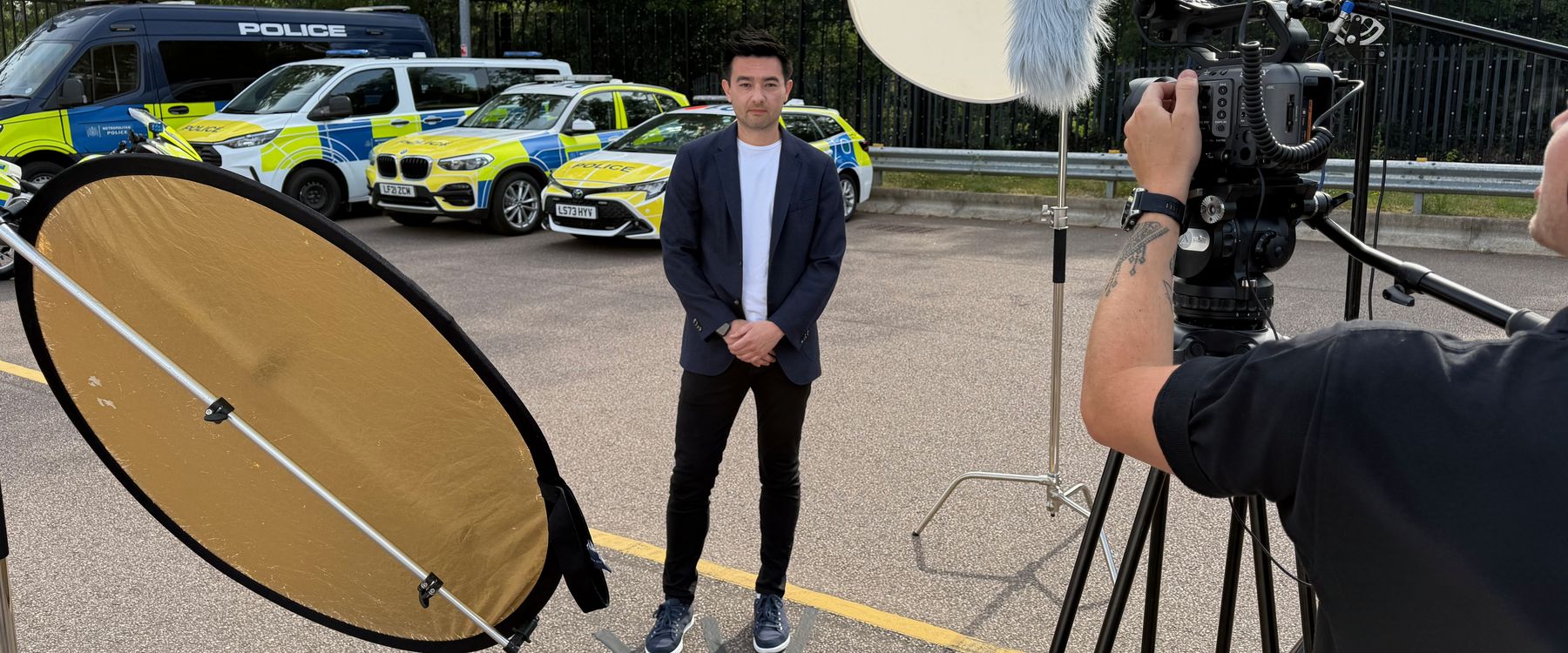
A separate venture, not Carbon Six work — but the clearest demonstration of what the same methodology can do when it is building a company from the ground up.
Modular steer-by-wire for automated and electric vehicles, taken from the prototype Thomas led at NEVS through to ISO 26262 ASIL-D production readiness. Acquired by Kongsberg Automotive, August 2025.
Before Carbon Six became the focus, Thomas held senior engineering roles in Formula 1 and at McLaren Automotive — employed, in-house, and where the discipline was learned.
Carbon-carbon disc design, and the development programme that transformed the thermal performance of the braking system. Trackside at every Grand Prix and test, supporting several teams and working directly with their engineers and drivers.
Brakes for every McLaren programme, current and future, leading the engineers and designers who delivered them. Wrote the design standards their carbon-ceramic systems were built to.